There is a connection between the act of writing and the materiality of fabric. In manuscript writing, text was built up like the threads or traces of a tapestry, but with the advent of Gutenberg print,
“…the text was no longer woven but assembled, pieced together from discrete graphic elements.” (Ingold, Lines 2007, p.73)
Stitching maintains a primitive flow like drawing or handwriting. It is a medium which allows for the conjunction of text and image and allows the build-up of layers, like collage. It also has a physicality and unlike painting, shares an intimate union with the fabric as the stitches break through the surface like skin.
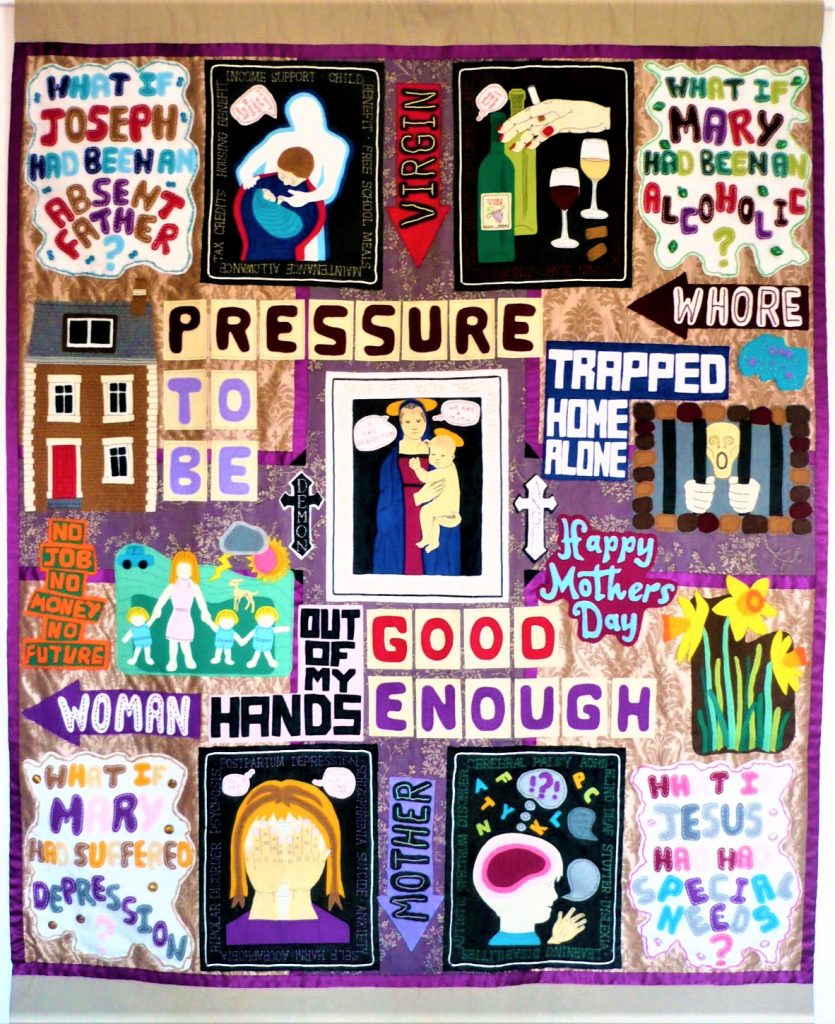
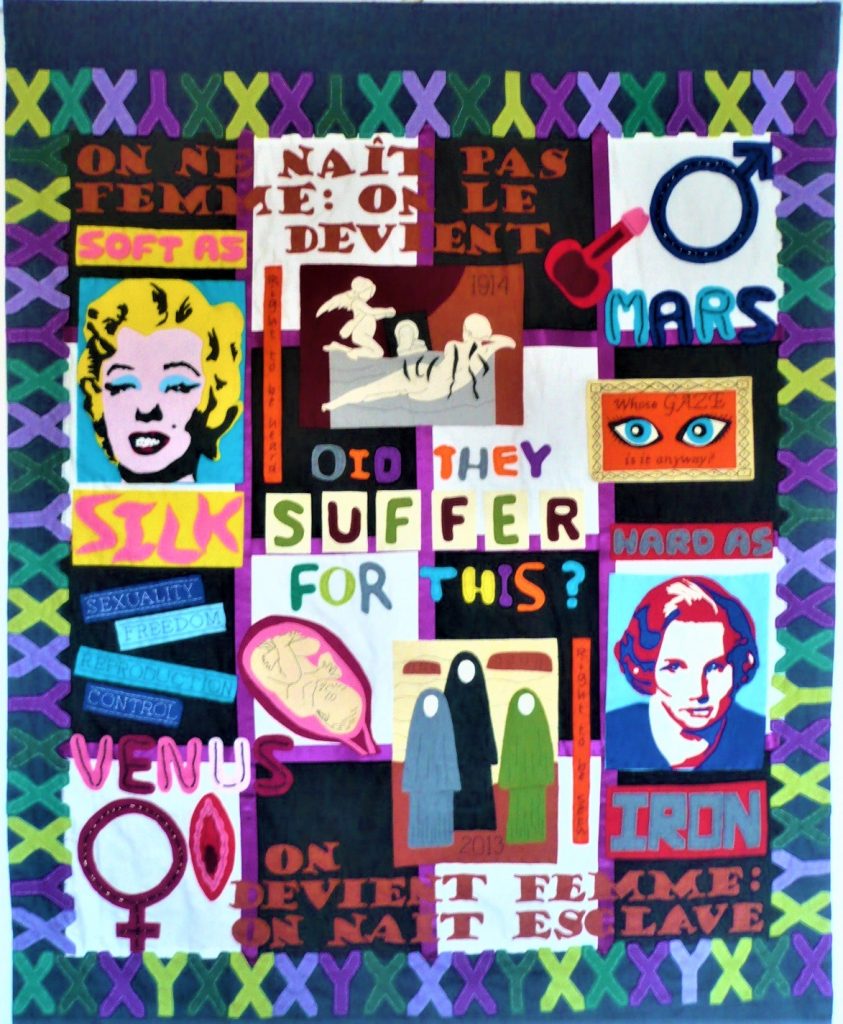
The Subversive Stitch
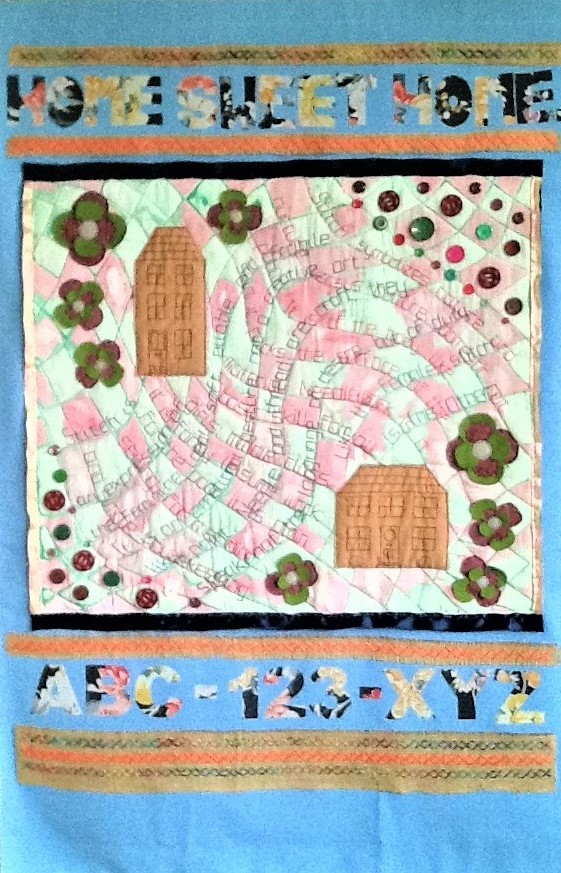
Based on the book by Rozsika Parker. The embroidered text reads:
Stitch is an expression of the feminine ideal: soft, pliable and fragile. It is an emotional gesture, not a creative art like paint. Needle and thread are craft; they speak not the language of desire, but of duty. Like the female, stitch is the Other.
Stitch symbolises nature and nurture versus culture; domestic not public. It is of the body; like skin it pricks the surface of the material. Needlework is a basic skill for all girls: middle class, it is fancy leisure work; for the poor, it is plain sewing for mending and simple housekeeping.
Uteri
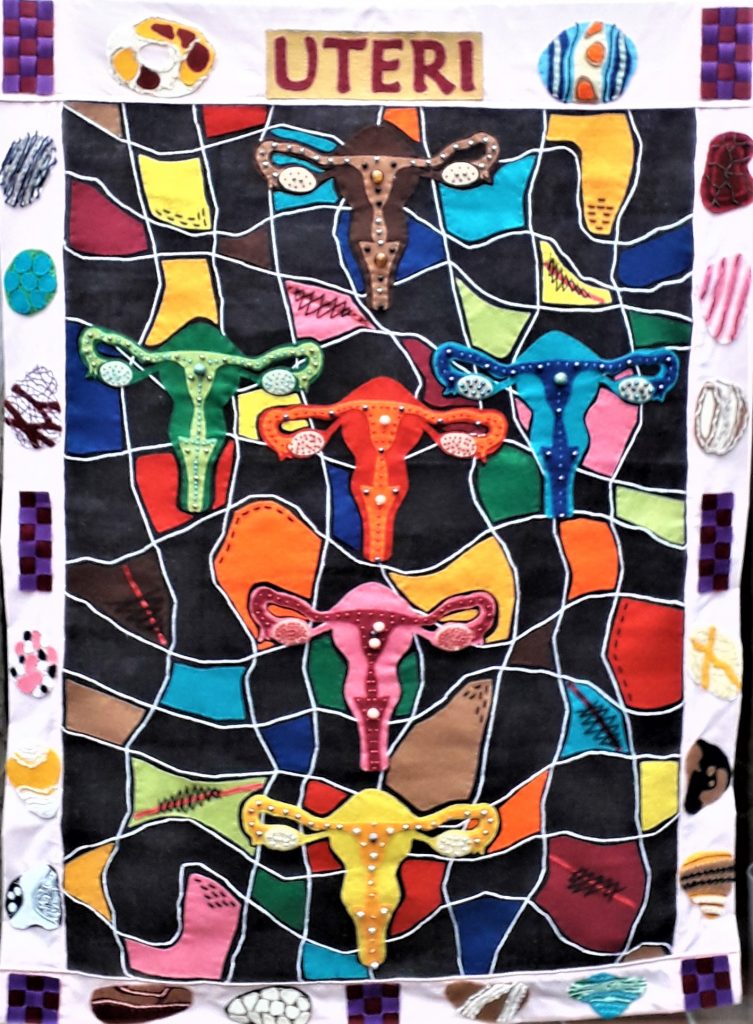
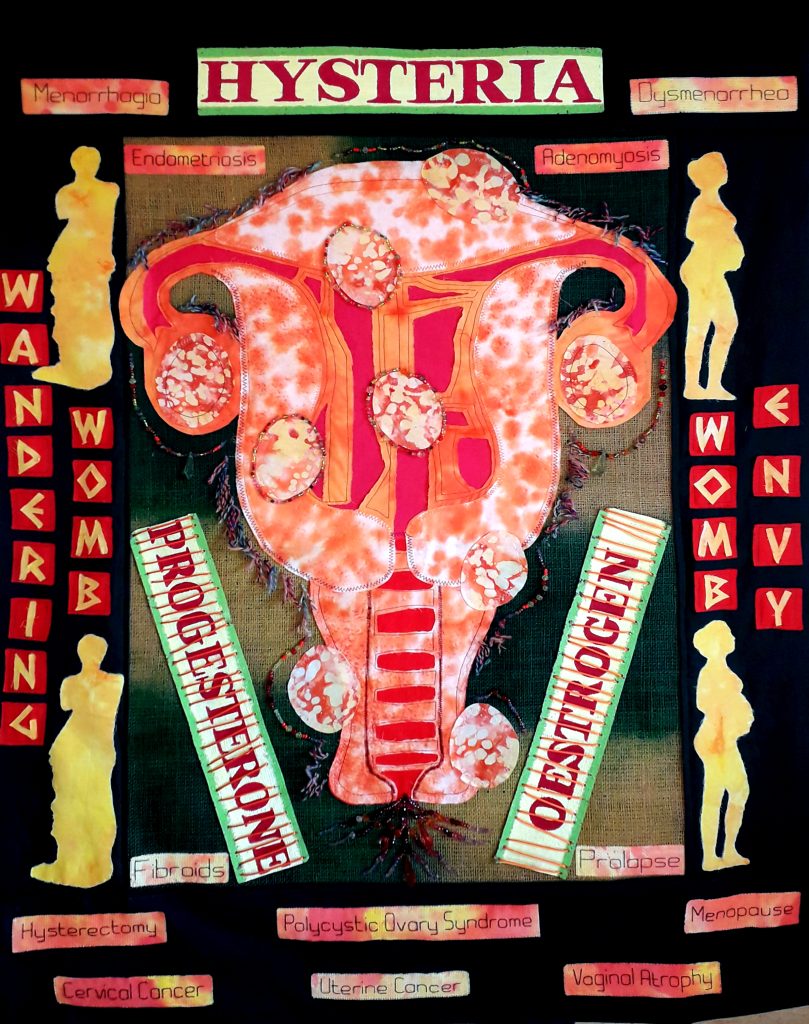
This appropriated image is “a simple diagram that represents the female reproductive system; to explain the relative position of the parts and how they work.” It is not a direct image like a photograph, or even a realistic copy, but it still represents. It sits at the boundary of text and image, like a metaphor, bearing a loose symbolism, which is accepted and recognised across cultures. It can be added to with other symbols and text to show its functions.
It is an example of an image or representation that is so familiar, it requires no label; an automatic, unconscious association, learned from biology at school or on TV, in textbooks, leaflets etc. Diagrams like this were prevalent throughout the enlightenment with its drive toward scientific enquiry, which sought to demonstrate and rationalize the workings of the human body, previously shrouded in mystery. It is an alternative to linguistic or algebraic explanation.
It is a sanitised version of female genitalia, but there is still an element of embarrassment, mockery or shame. It is not pornography, not an ‘outside’ view, that excites or repulses, but a working model of something we can never actually see.
It represents reproduction. One could say it defines femininity, but this is questionable. Humans are not women because they have a womb and a vagina but because they have been constructed mentally as a woman. But it defines to a certain extent the life women will lead and how they are treated. It stands with its counterpart, the male reproductive system as the biological opposite, whereas a woman exists in culture as the ‘Other’.
Its functions determine and regulate the stages in a woman’s life from childhood to adulthood through puberty and then from womanhood into menopause and old age. It produces hormones, which initiate and terminate these metamorphic stages, over which women have no control, like the transformation of a butterfly. It enables the function of childbirth, which again historically can be out of the child bearer’s control, despite the contraceptive revolution.
It is the organ that has the most impact on the psyche, in that it causes the dual opposites of sublime pleasure and excruciating pain. Similarly, on the one hand, it is objectified and demonised; but it can also be revered, bedecked and ‘vajazzled’.
The diagram bears a striking resemblance in form to the iconic image of the Crucifixion and so the arrangement of the elements is designed to look like a figure on a cross. Jesus, according to religious theory, died for our sins, but for women, the weight of sin was transferred to the properties of this part of their anatomy with its temptations for copulation, periodic bleeding, site of disease and childbirth. It stimulates the fluid leakages and miasma which subjected women to notions of impurity and banishment from the church in the past. Christ’s passion was exalted; but the passion of women was deemed immoral and swathed in feelings of fear and loathing. It represents men’s desire to control the womb as an expression of their envy of its power.